
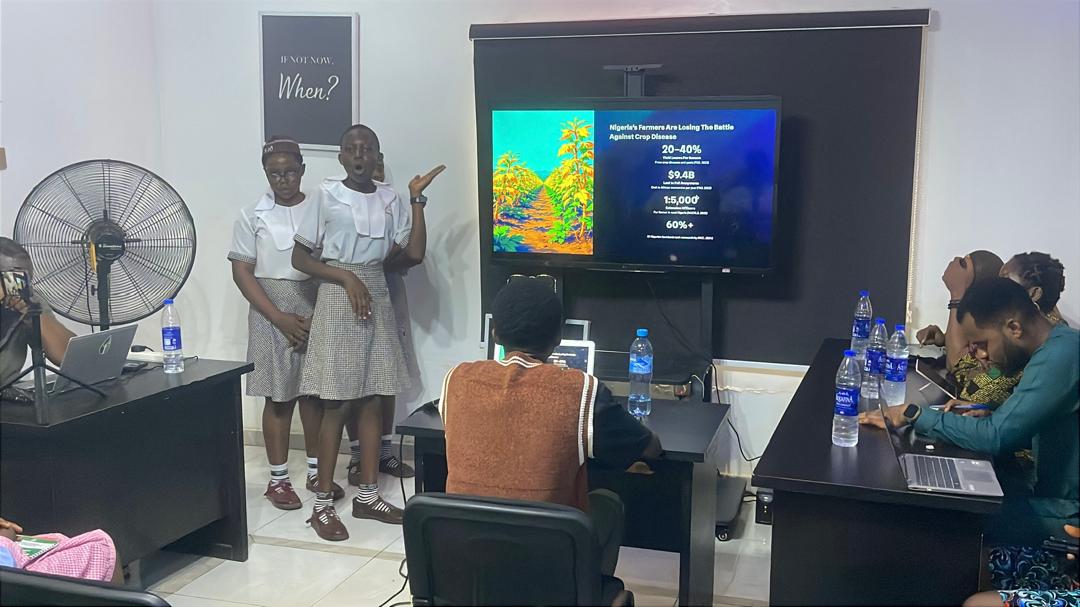
Out of sixty secondary schools across Anambra State that applied, only five were selected to participate in the state round of the Nigerian Girls in ICT Programme. Ado Girls Secondary School, Onitsha, was one of them, and it was the only public school on that list. In a field dominated by private institutions, a public school from Onitsha earned its place, and that distinction alone deserves recognition.
The Nigerian Girls in ICT Programme is designed to close the gender gap in technology by giving young women structured exposure to digital skills, industry networks, and career pathways in ICT. Being selected from a pool of sixty applicants is not a small thing.

It placed Ado Girls in the same room as some of the most well-resourced schools in the state, including the renowned Regina Pacis, Trinity Model School, and Mater Maria Secondary School. These are institutions with long-standing reputations and significant infrastructure behind them. Ado Girls, a public school, held its ground among them.
At the state level competition held in April 2026, the school finished fifth. That result, read without context, might seem modest. Read with context, it tells a different story entirely. Finishing fifth in Anambra State, against competitors of that calibre, as the only public school in the group, is a performance that reflects genuine ability and preparation. [IMAGE 3 HERE] No one handed Ado Girls that result. The students competed for it.
What makes the achievement even more meaningful is the trajectory it sits within. In March 2026, students from the school received the Artificial Intelligence Youth Educators Society International AI Award, having beaten teams from the United States, the United Kingdom, China, and Russia. Weeks later came the Girls in ICT state competition. Then on the 27th of May 2026, International Children’s Day, students from JSS 1 and JSS 2 stood before Governor Charles Chukwuma Soludo at Dr. Alex Ekwueme Square in Awka and made presentations that drew widespread attention and praise. Each of these moments belongs to the same school, the same community, the same girls.

Sixty schools applied. Five were chosen. Ado Girls was the only public school among them, and it competed at the state level against some of Anambra’s finest institutions. The result was fifth place, but the statement was something larger: that excellence is not the exclusive property of well-funded private schools. It grows wherever the conditions are right, and at Ado Girls Secondary School, those conditions are clearly right.